
AI Vision Analytics: How Computer Vision Improves Workplace Safety
September 10, 2026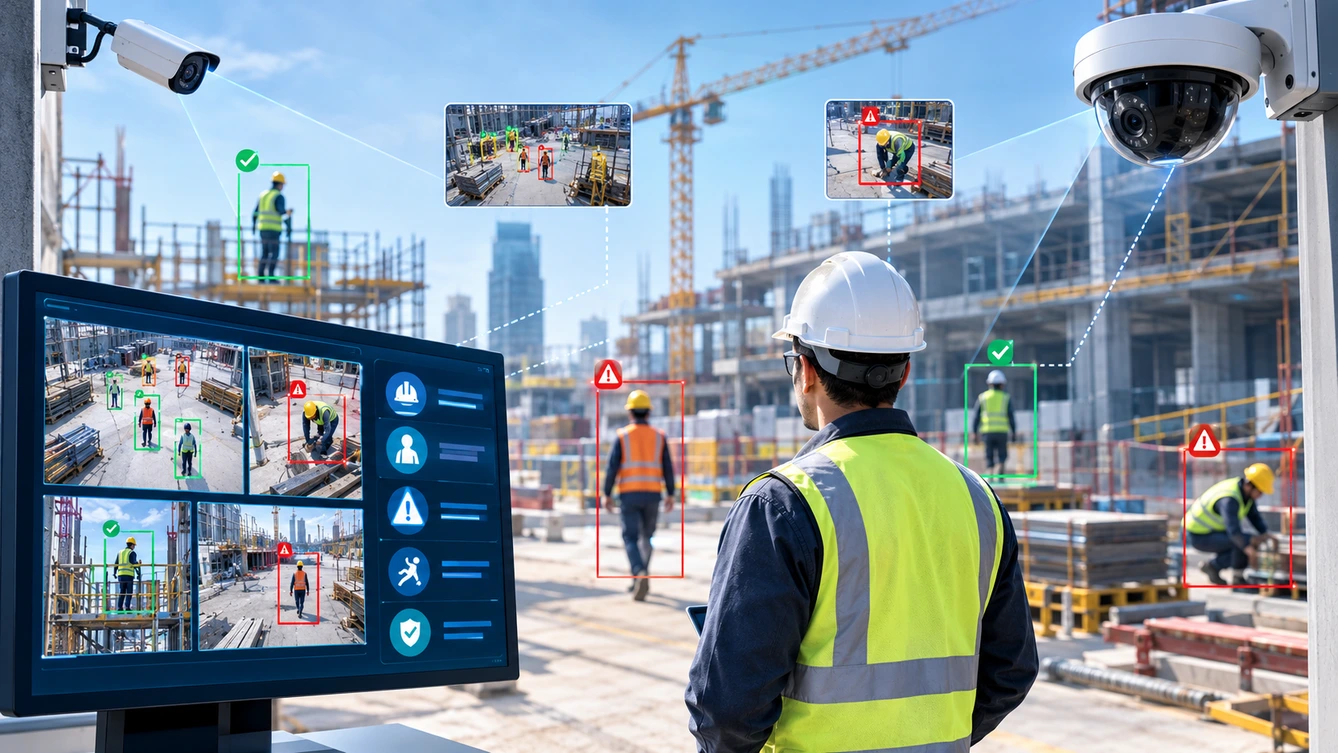
Workplace safety is a critical priority for businesses operating in environments such as warehouses, construction sites, manufacturing facilities, logistics hubs, and industrial workplaces. While traditional safety procedures rely heavily on employee training, manual inspections, and physical supervision, modern technology is changing how businesses identify and prevent workplace hazards.
AI Vision Analytics uses artificial intelligence (AI), computer vision, and video analytics to monitor workplace environments and identify potential safety risks in real time. Instead of relying solely on human observation, AI-powered systems can continuously analyse camera footage, recognise unsafe behaviours, and alert supervisors when safety rules are violated.
What Is AI Vision Analytics?
AI Vision Analytics is a technology that uses computer vision and artificial intelligence to interpret visual information captured by cameras. The system analyses images and video footage to detect objects, people, activities, and environmental conditions.
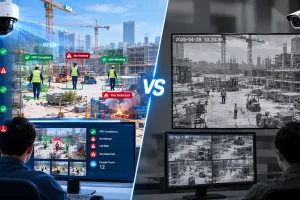
Unlike conventional CCTV systems that primarily record video for later review, AI-powered vision systems can actively analyse what is happening within a monitored area.
For example, an AI Vision Analytics system may detect:
• Workers entering restricted areas
• Employees without required personal protective equipment (PPE)
• People walking into vehicle operating zones
• Unsafe proximity between workers and machinery
• Forklifts entering pedestrian areas
• Vehicles travelling in restricted zones
• Blocked emergency exits
• Unsafe workplace behaviour
• Smoke, fire, or other visible hazards
When a potentially dangerous situation is detected, the system can generate an alert so that supervisors or safety teams can respond more quickly.
How Computer Vision Improves Workplace Safety
1. Detecting PPE Compliance
Personal protective equipment is an important part of workplace safety. Depending on the environment, employees may be required to wear helmets, safety vests, gloves, goggles, safety shoes, or other protective equipment.
However, manually checking PPE compliance across a large warehouse, construction site, or industrial facility can be difficult.
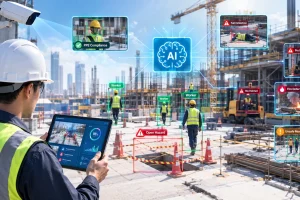
Computer vision can automatically analyse camera feeds and identify whether workers are wearing the required PPE. For example, an AI system can be trained to recognise safety helmets or high-visibility vests.
If a worker enters a designated area without the required equipment, the system can trigger an alert.
This allows safety teams to address violations more quickly while reducing the need for constant manual monitoring.
2. Preventing Unsafe Worker-Vehicle Interactions
Warehouses, logistics facilities, and construction sites often contain both workers and moving vehicles such as forklifts, trucks, and heavy machinery.
One major safety concern is the interaction between pedestrians and vehicles.
AI Vision Analytics can use computer vision to identify workers and vehicles within the same area. By analysing their positions and movement, the system can identify potentially dangerous proximity or restricted-zone violations.
For example, if a pedestrian enters a forklift operating zone, the system can immediately notify the appropriate personnel.
This creates an additional layer of protection in areas where human visibility may be limited.
3. Monitoring Restricted Areas
Certain workplace areas may only be accessible to authorised personnel. These could include machinery rooms, hazardous material storage areas, loading zones, or high-risk operational areas.
AI-powered cameras can identify when people enter predefined restricted zones.
Instead of requiring a security officer to monitor every camera continuously, the system can automatically detect movement within these areas and send an alert when a potential violation occurs.
This can improve both workplace safety and operational security.
4. Real-Time Safety Alerts
One of the biggest advantages of AI Vision Analytics is its ability to provide real-time alerts.
Traditional CCTV systems often require someone to watch the footage or review recordings after an incident has already occurred.
AI-powered systems can continuously analyse live video and identify predefined safety events.
For example:
Worker enters restricted zone → AI detects movement → System generates alert → Supervisor receives notification → Safety team responds
This can help businesses move from a reactive approach to a more proactive safety strategy.
5. Reducing Human Monitoring Limitations
Human supervision remains an important part of workplace safety, but people cannot realistically monitor hundreds of cameras simultaneously without fatigue or distraction.
AI Vision Analytics can act as an additional monitoring layer.
Instead of replacing safety officers, the technology helps them focus their attention on situations that require human intervention.
The system continuously analyses visual information and highlights events that may require investigation.
This can make safety monitoring more efficient, particularly in large facilities with multiple operational zones.
From Incident Detection to Safety Prevention
A key benefit of AI Vision Analytics is that businesses can use collected data to identify recurring safety patterns.
For example, if a warehouse repeatedly records pedestrian-zone violations in a particular location, management can investigate why the problem occurs.
Possible solutions could include:
• Improving workplace signage
• Changing pedestrian routes
• Installing physical barriers
• Adjusting vehicle movement patterns
• Providing additional safety training
• Redesigning operational workflows
This means AI Vision Analytics can contribute to a continuous workplace safety improvement process.
Instead of simply asking “What caused this accident?”, organisations can begin asking “What safety risks are repeatedly occurring, and how can we prevent them?”
AI Vision Analytics and Workplace Safety Data
Modern AI Vision Analytics platforms can also turn visual events into structured safety data.
Businesses can monitor metrics such as:
• Number of PPE violations
• Number of restricted-area entries
• Worker-vehicle proximity events
• Safety incidents by location
• Safety violations by time period
• Frequency of specific safety behaviours
• Trends across different facilities or departments
This information can help managers understand where safety risks are concentrated.
For example, a dashboard may reveal that most PPE violations occur during a particular shift. Management can then investigate whether additional training, supervision, or operational changes are required.
Integrating AI Vision with Existing Workplace Systems
AI Vision Analytics does not have to operate as a standalone solution.
Businesses can integrate computer vision with other technologies, including IoT sensors, access control systems, fleet management platforms, workforce management systems, and digital dashboards.
For example, an AI camera may detect a worker entering a restricted vehicle zone while an IoT system provides information about nearby equipment.
Combining these data sources can provide a more complete picture of workplace conditions.
For businesses managing large facilities, this integrated approach can help connect safety monitoring with broader operational processes.
The Future of Workplace Safety
As artificial intelligence and computer vision technology continue to develop, workplace safety systems are becoming increasingly intelligent.
Future systems may be able to identify more complex behaviours, analyse environmental conditions, detect unusual activities, and provide increasingly detailed safety insights.
The goal is not simply to record workplace incidents. The greater opportunity is to identify risks before they become accidents.
For businesses, this can support a stronger safety culture while improving operational visibility and response times.
Conclusion
AI Vision Analytics is transforming workplace safety by allowing businesses to monitor environments, detect hazards, and respond to safety violations more efficiently. Through computer vision, organisations can automate the detection of PPE violations, restricted-area access, unsafe worker-vehicle interactions, and other workplace risks. More importantly, AI-generated safety data can help businesses understand recurring hazards and make informed improvements to workplace processes. As workplaces become increasingly connected and data-driven, combining AI, computer vision, IoT, and real-time analytics can provide businesses with a smarter approach to workplace safety — helping organisations move from reactive incident management toward proactive risk prevention.