
Driver Behaviour Monitoring in Fleet Management System: The Complete 2026 Guide to Safer, Smarter & More Efficient Fleets
July 30, 2026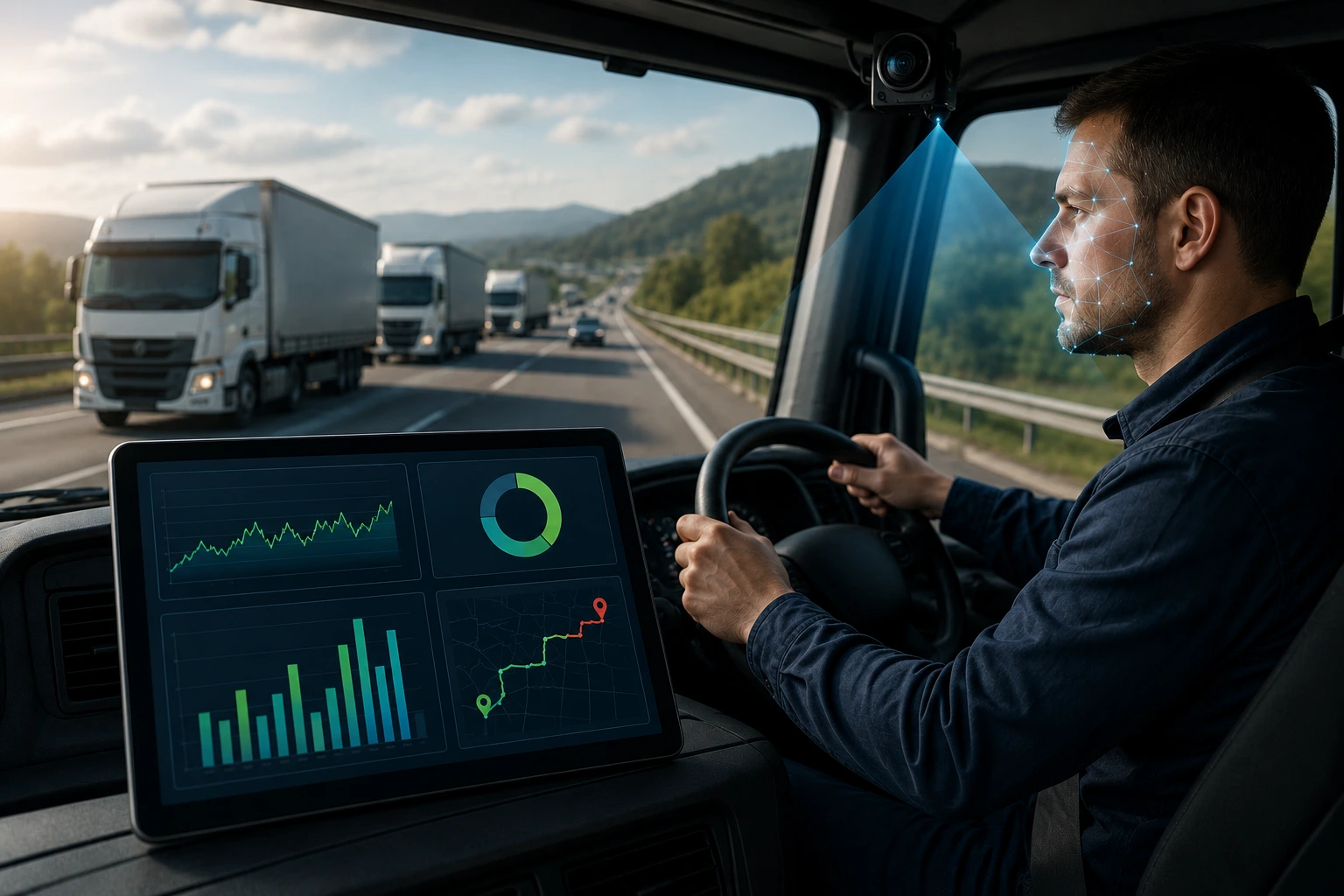
Drivers are the backbone of every fleet operation. However, unsafe driving habits such as speeding, harsh braking, rapid acceleration and excessive idling can significantly increase fuel consumption, vehicle wear and tear, accident risks, and operating costs.
While traditional fleet management focuses on tracking vehicle locations, modern Fleet Management Systems (FMS) go a step further by monitoring driver behaviour in real time. By analysing driving patterns and providing actionable insights, businesses can improve road safety, increase productivity, and reduce fleet operating expenses.
Whether you manage delivery vans, logistics trucks, buses, service vehicles or heavy equipment, Driver Behaviour Monitoring is becoming an essential feature of every intelligent Fleet Management System.
What is Driver Behaviour Monitoring?
Driver Behaviour Monitoring is the process of collecting and analysing driving data to evaluate how safely and efficiently a vehicle is being operated.
Instead of relying solely on complaints or accident reports, a Fleet Management System continuously records driving events such as:
• Speeding
• Harsh acceleration
• Harsh braking
• Sharp cornering
• Excessive idling
• Rapid lane changes
• Fatigue-related driving (when integrated with AI dashcams)
• Seatbelt compliance (supported vehicles)
• Distracted driving (with AI-enabled cameras)
This information helps fleet managers identify unsafe driving habits before they lead to costly incidents.
Why Driver Behaviour Monitoring Matters
A company’s vehicles are a reflection of its brand. Poor driving behaviour doesn’t just increase operating costs—it can also damage customer trust and corporate reputation.
Without proper monitoring, businesses may experience:
• Higher accident rates
• Increased insurance premiums
• Excessive fuel consumption
• Frequent vehicle breakdowns
• Costly maintenance
• Reduced vehicle lifespan
• Customer complaints
• Increased downtime
Monitoring driver behaviour enables companies to proactively improve fleet performance rather than reacting after incidents occur.
How a Fleet Management System Monitors Driver Behaviour
A Fleet Management System combines GPS tracking, vehicle telematics, onboard sensors and optional AI dashcams to provide a complete picture of driver performance.
GPS Vehicle Tracking
GPS data records:
• Vehicle speed
• Route taken
• Trip duration
• Driving distance
• Stop locations
This establishes the foundation for analysing driving habits.
Vehicle Telematics
Vehicle telematics captures key operational data, including:
• Engine RPM
• Ignition status
• Throttle position
• Engine hours
• Idle time
• Vehicle speed
• Odometer readings
These metrics help identify inefficient driving patterns.
AI Dashcams (ADAS & DMS)
When integrated with AI-powered dashcams, Driver Behaviour Monitoring becomes even more powerful.
Advanced Driver Assistance Systems (ADAS) can detect:
• Forward collision warnings
• Lane departure warnings
• Unsafe following distance
• Pedestrian detection
Driver Monitoring Systems (DMS) can identify:
• Driver fatigue
• Phone usage while driving
• Smoking
• Distracted driving
• Driver inattentiveness
• Seatbelt violations
Fleet managers receive instant alerts, allowing them to intervene before accidents occur.
Key Driver Behaviour Monitoring Features
Speeding Alerts
Speeding remains one of the leading causes of road accidents.
Fleet managers can configure speed limits based on:
• Vehicle type
• Road classification
• Project site
• Geographic zones
Real-time notifications are sent whenever drivers exceed predefined speed thresholds.
Harsh Braking Detection
Frequent harsh braking may indicate:
• Tailgating
• Distracted driving
• Aggressive driving
• Poor anticipation
Reducing harsh braking improves passenger comfort, lowers tyre wear and decreases maintenance costs.
Harsh Acceleration Monitoring
Rapid acceleration consumes more fuel and places additional stress on the engine and transmission.
The Fleet Management System records every harsh acceleration event, allowing managers to coach drivers towards smoother driving habits.
Sharp Cornering Detection
Aggressive cornering increases the risk of vehicle rollovers, especially for trucks carrying heavy or unstable loads.
Monitoring cornering behaviour helps improve safety while protecting valuable cargo.
Excessive Idling Monitoring
Leaving engines running unnecessarily wastes fuel and increases carbon emissions.
The system records:
• Idle duration
• Idle frequency
• Idle locations
• Driver responsible
Businesses can establish idle time policies to reduce unnecessary fuel consumption.
Driver Scorecards
One of the most valuable features is automated Driver Scorecards.
Each driver receives a performance score based on:
• Speeding events
• Harsh braking
• Acceleration
• Cornering
• Idling
• Trip efficiency
• Safety violations
Managers can easily identify top-performing drivers while providing targeted coaching for those requiring improvement.
Benefits of Driver Behaviour Monitoring
Improve Road Safety
Monitoring unsafe driving behaviours significantly reduces accident risks and creates a safer working environment for employees and the public.
Lower Fuel Consumption
Smooth driving requires less fuel. Reducing speeding, rapid acceleration and excessive idling helps businesses cut fuel expenses without affecting productivity.
Reduce Vehicle Wear and Tear
Aggressive driving accelerates wear on:
• Tyres
• Brakes
• Suspension
• Engine
• Transmission
Safer driving extends vehicle lifespan and lowers maintenance costs.
Lower Insurance Cost
Many insurers recognise fleets with strong safety programmes as lower-risk customers, potentially resulting in reduced insurance premiums over time.
Increase Driver Accountability
When drivers know that performance is measured fairly using objective data, they are more likely to follow company policies and adopt safer driving habits.
Improve Customer Satisfaction
Safe and responsible driving reflects positively on your business.
Customers appreciate reliable deliveries, professional drivers and reduced accident-related delays.
Support ESG and Sustainability Goals
Fuel-efficient driving reduces carbon emissions while supporting corporate Environmental, Social and Governance (ESG) initiatives.
Industries That Benefit from Driver Behaviour Monitoring
Driver Behaviour Monitoring is valuable across a wide range of industries, including:
• Logistics & Distribution
• Courier Services
• Last-Mile Delivery
• Public Transportation
• Construction
• Waste Collection
• Facilities Management
• Field Service Operations
• Utilities
• Oil & Gas
• Government Agencies
• Security Patrol Services
• School Transport
• Healthcare Transport
Any organisation operating a vehicle fleet can improve safety and efficiency through data-driven driver management.
Best Practices for Improving Driver Behaviour
To maximise the benefits of Driver Behaviour Monitoring, businesses should:
• Establish clear driving policies
• Set realistic speed thresholds
• Review driver scorecards regularly
• Conduct periodic driver coaching sessions
• Reward safe driving performance
• Investigate repeated high-risk driving events
• Integrate AI dashcams for additional visibility
• Use analytics to identify fleet-wide trends
Driver monitoring should be viewed as a tool for continuous improvement rather than punishment.
Why Choose V3 Smart Technologies?
V3 Smart Technologies provides an intelligent Fleet Management System that helps businesses across Singapore and Southeast Asia improve driver safety and fleet efficiency.
Our Driver Behaviour Monitoring solution includes:
• Real-time GPS vehicle tracking
• Driver scorecards
• Speeding alerts
• Harsh braking detection
• Harsh acceleration monitoring
• Cornering analysis
• Idle time monitoring
• AI Dashcam (ADAS & DMS) integration
• Video evidence for incident investigations
• Fleet analytics dashboard
• Mobile application access
• Customisable reports and alerts
With actionable insights and real-time visibility, businesses can reduce accidents, improve driver performance and lower operating costs.
Frequently Asked Questions (FAQ)
What is Driver Behaviour Monitoring?
Driver Behaviour Monitoring is a Fleet Management System feature that tracks driving habits such as speeding, harsh braking, acceleration, idling and cornering to improve safety and fleet efficiency.
Can Driver Behaviour Monitoring reduce accidents?
Yes. By identifying unsafe driving habits early, businesses can provide coaching and corrective actions before accidents occur.
Does Driver Behaviour Monitoring require an AI dashcam?
No. Basic monitoring can be performed using GPS tracking and vehicle telematics. AI dashcams provide additional insights such as fatigue detection, distracted driving and collision warnings.
Can I monitor individual driver performance?
Yes. Fleet Management Systems generate driver scorecards, allowing managers to evaluate each driver’s performance objectively.
Is Driver Behaviour Monitoring suitable for small fleets?
Absolutely. Whether managing five vehicles or several thousand, Driver Behaviour Monitoring helps businesses improve safety, reduce costs and increase operational efficiency.
Conclusion
Your fleet’s success depends not only on where your vehicles go, but also on how they are driven. Driver Behaviour Monitoring transforms everyday driving data into meaningful insights that improve safety, reduce costs and extend vehicle lifespan.
By combining GPS tracking, telematics and AI-powered analytics, V3 Smart Technologies’ Fleet Management System empowers businesses to build a safer, more efficient and more sustainable fleet.
Investing in Driver Behaviour Monitoring today means fewer accidents, lower operating costs and greater confidence in every journey tomorrow.