

Cold Chain Monitoring: How Fleet Management Systems Protect Temperature-Sensitive Deliveries in 2026
August 14, 2026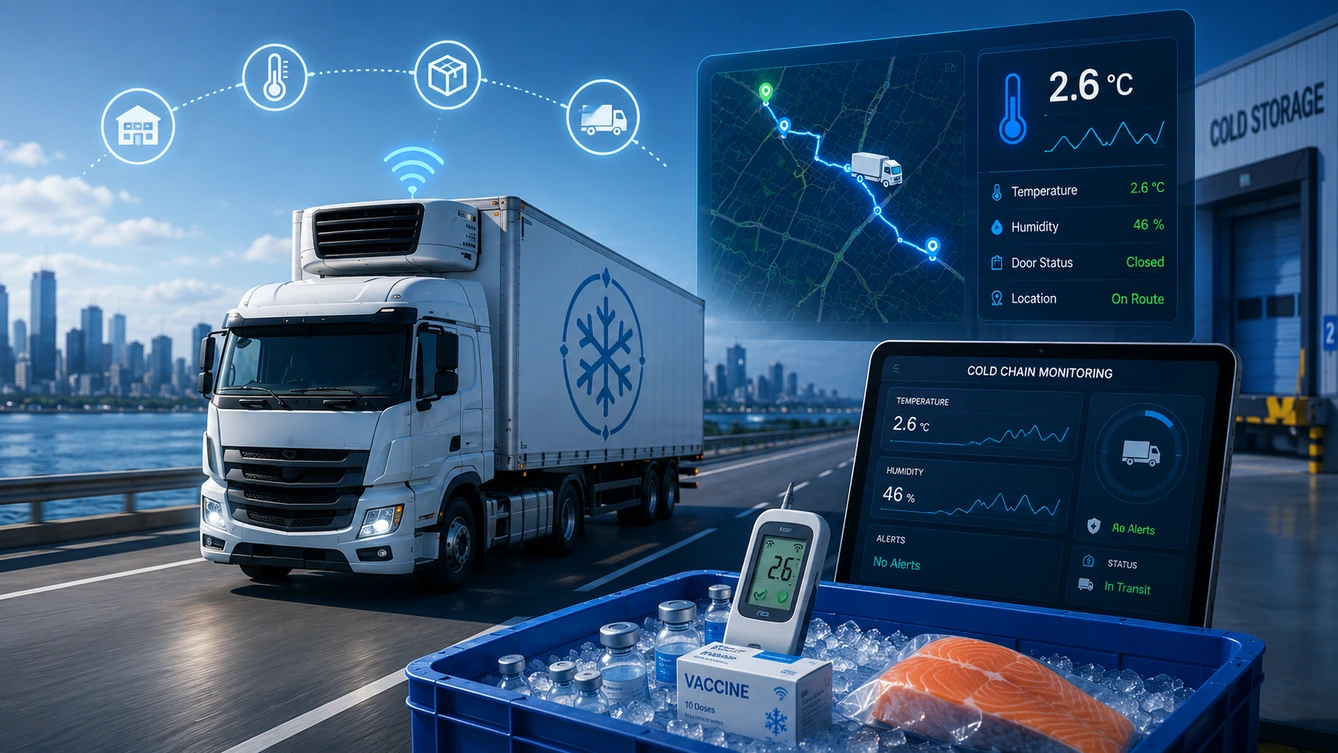
For businesses transporting food, pharmaceuticals, vaccines and other temperature-sensitive products, maintaining the correct temperature throughout transportation is critical.
A modern Fleet Management System (FMS) combined with IoT temperature sensors can provide real-time visibility of vehicle location, cargo temperature and potential temperature excursions.
In 2026, cold chain monitoring is becoming an increasingly important component of smart fleet management, helping businesses protect products, reduce waste and improve compliance.
What Is Cold Chain Monitoring?
Cold chain monitoring is the continuous monitoring of temperature-sensitive goods as they move through the supply chain. Products such as fresh food, frozen goods, pharmaceuticals and certain medical products may require specific temperature ranges during transportation. If temperatures move outside the required range for too long, products can deteriorate, become unsafe, or lose their intended quality. A Fleet Management System with temperature monitoring helps fleet managers identify these issues before they become costly problems.
How Does Cold Chain Monitoring Work?
Temperature sensors installed inside refrigerated vehicles continuously measure the cargo environment.
The sensor data can be transmitted to a cloud-based Fleet Management System, allowing fleet managers to monitor:
• Current cargo temperature
• Temperature history
• Vehicle location
• Refrigeration status
• Temperature excursions
• Delivery information
• Driver and vehicle activity
When the temperature exceeds a predefined threshold, the system can automatically generate an alert.
This allows fleet managers to investigate the problem quickly rather than discovering damaged goods after delivery.
Why Integrate Cold Chain Monitoring with Fleet Management?
Temperature monitoring alone provides only part of the picture. A Fleet Management System can combine temperature data with GPS tracking and vehicle information. For example, if a refrigerated truck experiences a temperature excursion, the fleet manager can immediately identify:
Where is the vehicle?
What temperature is the cargo currently experiencing?
How long has the temperature been outside the required range?
Which delivery is affected?
This combination of GPS tracking, IoT sensors and fleet management software creates much greater visibility across the cold chain.
Benefits of Cold Chain Fleet Monitoring
1. Reduce Product Loss
Early warnings allow fleet operators to respond to temperature problems before products are compromised.
2. Improve Visibility
Fleet managers can monitor both vehicle location and cargo conditions from a central dashboard.
3. Improve Compliance
Digital temperature records provide useful documentation for businesses that need to demonstrate proper handling and transportation conditions.
4. Reduce Manual Monitoring
Instead of relying on drivers to manually record temperatures, IoT sensors can automatically capture readings throughout the journey.
5. Improve Customer Confidence
Reliable temperature records help demonstrate that sensitive products have been transported under the required conditions.
Cold Chain Monitoring for Food and Pharmaceutical Logistics
Cold chain monitoring is particularly important for industries where temperature control directly affects product quality and safety.
Common applications include:
• Food and beverage distribution
• Frozen food logistics
• Fresh produce transportation
• Pharmaceutical distribution
• Medical supplies
• Healthcare logistics
• Laboratory products
• Cold storage transportation
For these businesses, a temperature monitoring system should work alongside GPS fleet tracking and fleet management software rather than operating as a completely separate platform.
Key Features to Look For: When selecting a Fleet Management System for cold chain operations, consider solutions that provide:
• Real-time GPS tracking
• Temperature sensors
• Configurable temperature thresholds
• Instant temperature alerts
• Historical temperature reports
• Geofencing
• Vehicle monitoring
• Driver identification
• Cloud-based dashboard
• Mobile access
• Data export and reporting
• IoT sensor integration
The ability to combine different data sources into one platform can significantly simplify fleet operations.
The Future of Cold Chain Fleet Management
The future of cold chain logistics is increasingly data-driven. IoT sensors, GPS tracking, cloud platforms, and analytics allow businesses to move beyond simply tracking vehicles. They can monitor the condition of the cargo while it is in transit. As businesses place greater emphasis on operational efficiency, product quality, and supply chain visibility, integrating cold chain monitoring with a Fleet Management System can provide a powerful way to manage temperature-sensitive transportation.
Conclusion
Cold chain monitoring is an essential capability for businesses transporting temperature-sensitive goods.
By integrating IoT temperature sensors, GPS tracking, and Fleet Management Systems, companies can monitor vehicle location and cargo conditions in real time, receive early warnings, and maintain digital records throughout the journey.
For logistics, food, pharmaceutical, and healthcare businesses, a connected Fleet Management System can provide the visibility needed to protect valuable cargo while improving fleet efficiency and operational control.