
AI Dashcams (ADAS/DMS):
The Complete Guide to Smarter Fleet Safety in 2026
July 22, 2026
Commercial fleets are under more pressure than ever. Rising insurance premiums, increasing accident rates, driver shortages, and growing customer expectations have made road safety and operational efficiency top priorities for fleet operators.
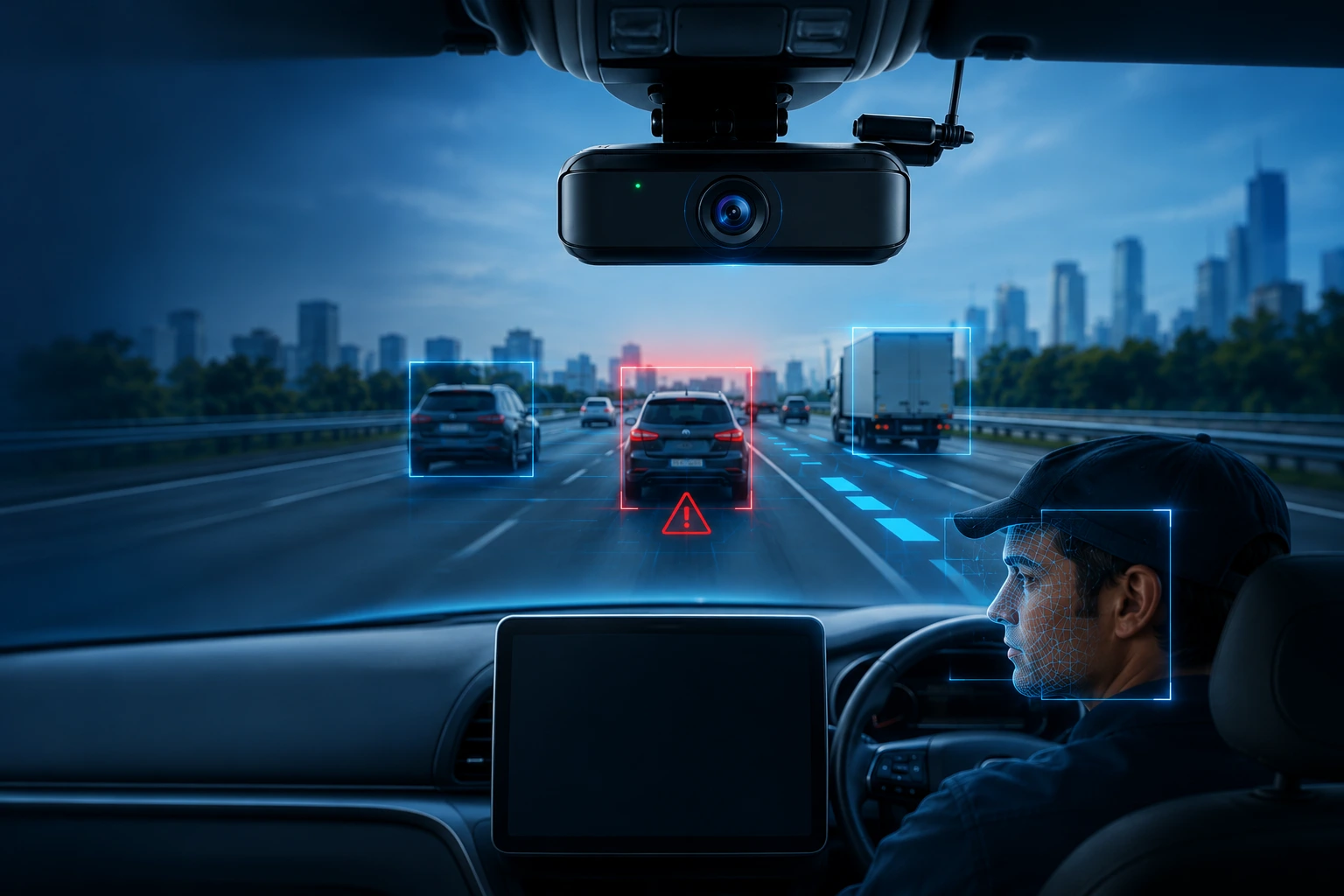
While traditional vehicle cameras merely record incidents, today’s AI Dashcams go much further. Powered by Advanced Driver Assistance Systems (ADAS) and Driver Monitoring Systems (DMS), they actively detect risks, alert drivers in real time, and provide fleet managers with actionable insights to reduce accidents before they happen.
Whether you manage logistics trucks, construction vehicles, buses, taxis, field service fleets, or delivery vans, AI Dashcams have become an essential component of modern fleet management.
What is an AI Dashcam?
An AI Dashcam is an intelligent in-vehicle camera that uses artificial intelligence, computer vision, and machine learning to analyse both the road ahead and the driver’s behaviour in real time.
Unlike conventional dashcams that only store video footage after an incident, AI Dashcams continuously monitor driving conditions and provide immediate audio and visual warnings whenever unsafe behaviour or hazardous situations are detected.
Most enterprise-grade AI Dashcams combine two technologies:
- ADAS (Advanced Driver Assistance Systems) — monitors external road conditions.
- DMS (Driver Monitoring Systems) — monitors the driver’s alertness and behaviour.
Together, these technologies help prevent accidents instead of simply recording them.
What is ADAS?
Advanced Driver Assistance Systems (ADAS) use forward-facing cameras and artificial intelligence to analyse the road environment.
Common ADAS features include:
1. Forward Collision Warning (FCW)
Detects vehicles ahead and warns drivers when they are approaching too quickly.
2. Lane Departure Warning (LDW)
Alerts drivers when the vehicle unintentionally drifts out of its lane without signalling.
3. Headway Monitoring
Measures the safe following distance between vehicles and warns drivers who are tailgating.
4. Pedestrian and Cyclist Detection
Recognises vulnerable road users and provides early alerts in busy urban environments.
5. Speed Limit Recognition
Identifies road speed signs to help drivers comply with speed regulations.
6. Dangerous Overtaking Detection
Warns drivers when overtaking manoeuvres may be unsafe.
These proactive alerts significantly reduce human error, which remains one of the leading causes of road accidents.
What is DMS?
Driver Monitoring Systems (DMS) use an inward-facing AI camera to monitor driver behaviour throughout every journey.
Unlike manual supervision, DMS operates continuously without fatigue or bias.
Common DMS capabilities include:
- Driver fatigue detection
- Drowsiness monitoring
- Mobile phone usage detection
- Smoking detection
- Seat belt compliance
- Driver distraction alerts
- Eyes-off-road detection
- Yawning detection
- Camera obstruction detection
When unsafe behaviour is detected, the system immediately issues an in-cabin voice alert while simultaneously notifying fleet managers through the cloud platform.
This allows companies to intervene before unsafe driving leads to costly accidents.
Why AI Dashcams Matter for Fleet Operators
Every road incident carries significant financial consequences beyond vehicle repairs.
Businesses often incur:
- Higher insurance premiums
- Vehicle downtime
- Delivery delays
- Lost productivity
- Cargo damage
- Legal claims
- Reputational damage
- Driver injuries
AI Dashcams help minimise these risks by encouraging safer driving habits through continuous coaching and objective performance monitoring.
Rather than relying solely on periodic driver training, fleet operators gain daily visibility into driver behaviour and can identify trends before they escalate into serious incidents.
Key Benefits of AI Dashcams
Improve Driver Safety
Real-time alerts help drivers correct unsafe behaviour immediately, reducing accident risks.
Reduce Insurance Claims
Video evidence provides an unbiased record of incidents, making insurance investigations faster and protecting companies against fraudulent claims.
Lower Operating Costs
Safer driving reduces repair expenses, vehicle downtime, fuel wastage, and maintenance costs.
Enhance Driver Accountability
Objective AI-generated events eliminate subjective reporting and encourage responsible driving.
Faster Incident Investigation
Fleet managers can instantly review event-triggered videos without manually searching through hours of footage.
Driver Coaching
Behaviour reports enable targeted coaching programmes based on actual driving data instead of assumptions.
AI Dashcams and Fleet Management Systems
The greatest value comes when AI Dashcams are integrated with a Fleet Management System (FMS).
Instead of operating as standalone devices, AI events are combined with:
- Real-time GPS tracking
- Vehicle location
- Driver identity
- Route history
- Vehicle speed
- Geofencing
- Trip playback
- Fleet reports
Fleet managers gain a complete operational picture from a single dashboard.
For example, if a harsh braking event occurs, managers can immediately view:
- Vehicle location
- Video footage
- Driver involved
- Speed before braking
- Route travelled
- Nearby road conditions
This integrated approach enables faster decision-making and more effective risk management.
Industries That Benefit from AI Dashcams
AI Dashcams are widely adopted across industries that depend on commercial vehicles, including:
- Logistics and transportation
- Courier and last-mile delivery
- Construction
- Facility management
- Waste management
- Public transport
- Oil and gas
- Utilities
- Security services
- Food distribution
- Cold chain logistics
- Municipal fleets
- Engineering services
Any organisation operating multiple vehicles can benefit from improved visibility, enhanced safety, and lower operational costs.
The Future of Fleet Safety
Artificial intelligence continues to reshape fleet operations. Today’s AI Dashcams no longer serve as passive recording devices—they have become intelligent safety assistants that actively help prevent accidents.
As AI technology evolves, fleet operators can expect even more advanced capabilities such as predictive risk scoring, driver behaviour analytics, real-time incident detection, and integration with connected vehicle ecosystems.
Businesses that adopt AI-powered fleet safety solutions today will be better positioned to reduce costs, improve compliance, protect their drivers, and deliver superior customer service.
Investing in AI Dashcams with ADAS and DMS is no longer just about recording what happened—it is about preventing incidents before they occur and building a safer, smarter, and more efficient fleet.