
2026 Fleet Management System Guide : Features, Benefits & Costs in Singapore
September 18, 2026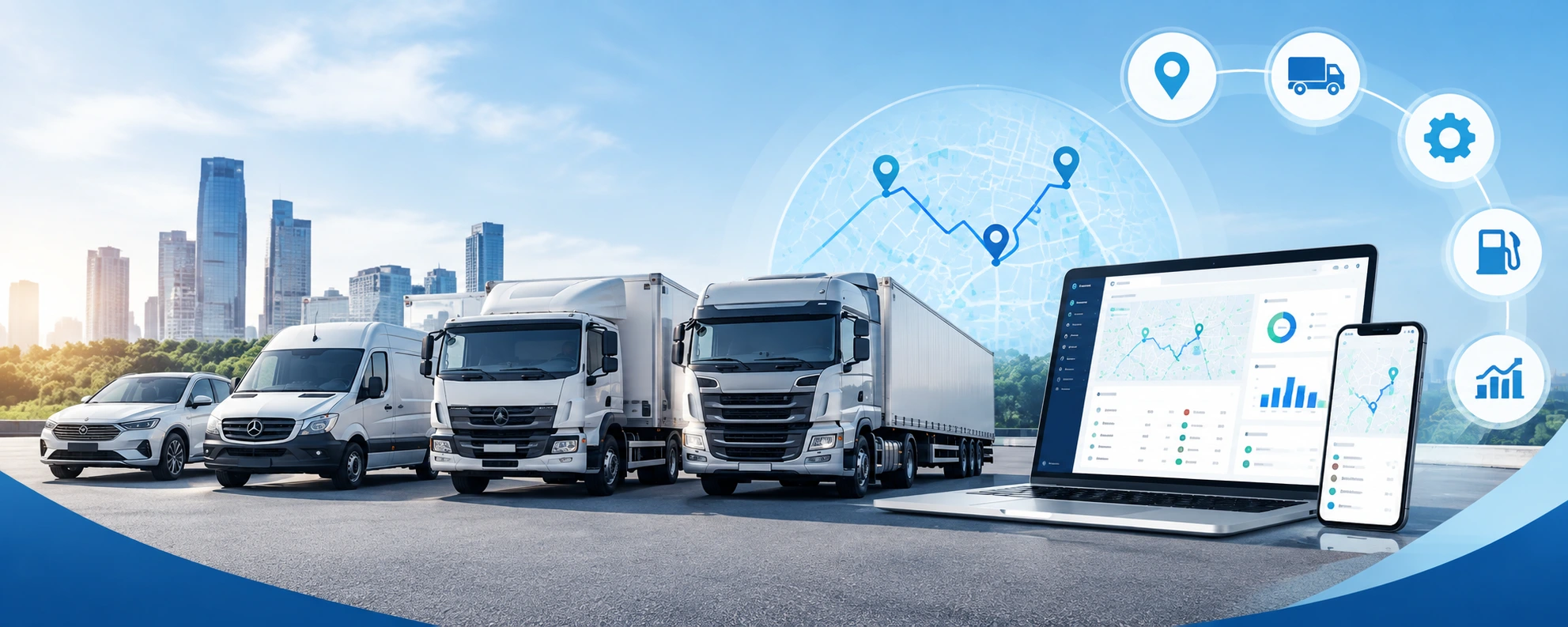
As digital transformation accelerates in 2026, Fleet Management System combined with Artificial Intelligence is significantly contributing to increased commercial transportation safety.
For over 24 years, V3 Smart Technologies has revolutionized fleet management for Singapore. Let us share our experience in this guide so you know everything about this development and why companies all over Singapore are taking the plunge. Follow along in this 2026 Fleet Management System guide.
What is Fleet Management System?
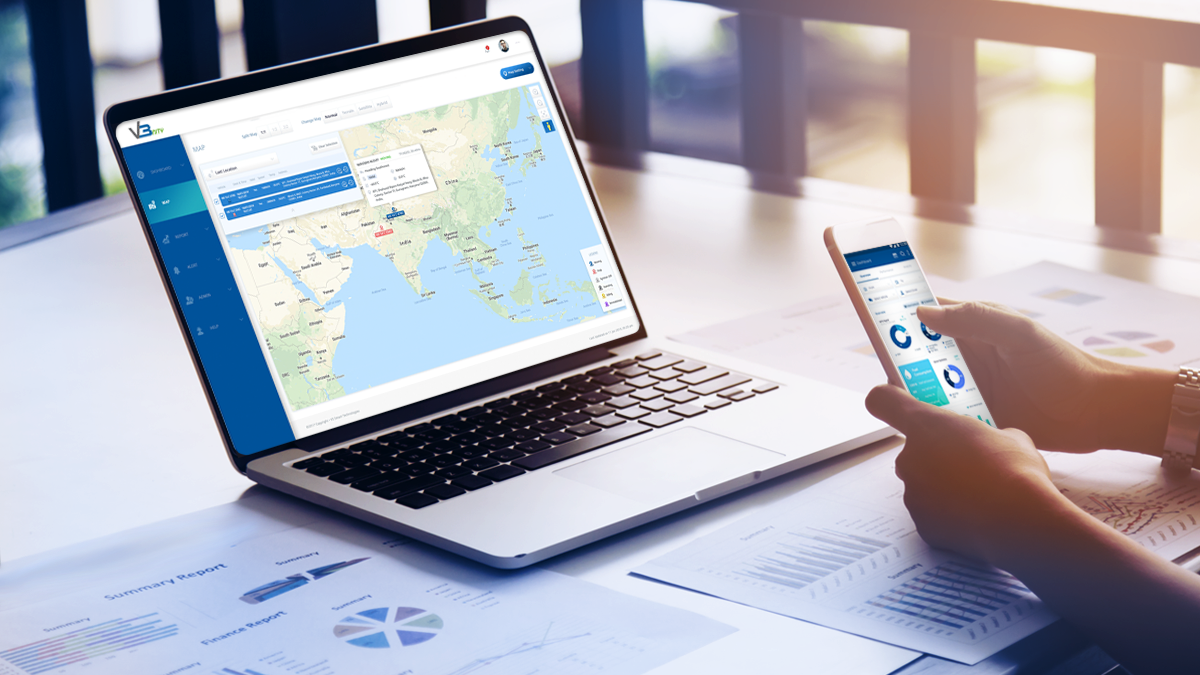
A Fleet Management System is software that helps businesses monitor with cutting edge AI technology, manage and optimize vehicles, drivers, maintenance, fuel consumption and fleet operations from a centralized platform. This technology has been innovated and compiled with helpful features into one V3 dashboard that can help SMEs globally.
One fleet management platform can help reduce costs and risks with the help of these existing features;
1. Real-time vehicle locations
2. Monitoring the driver’s behavior
3. Route optimization
4. Consumption of fuel
5. Vehicle service intervals
6. playback and trip history
7. Analysis of idling time
8. Geo-fence alerts
9. Vehicle report usage
How Does a Fleet Management System Work?
The system functions by gathering information on vehicles via GPS and IoT devices, relaying this data across a mobile network and processing it within the software. Next, fleet managers can access the information on a centralized dashboard, receive alerts, generate reports and use real-time fleet data to enhance operational efficiency and make the right business decisions.
Key Features of a Fleet Management System
1. GPS Vehicle Tracking
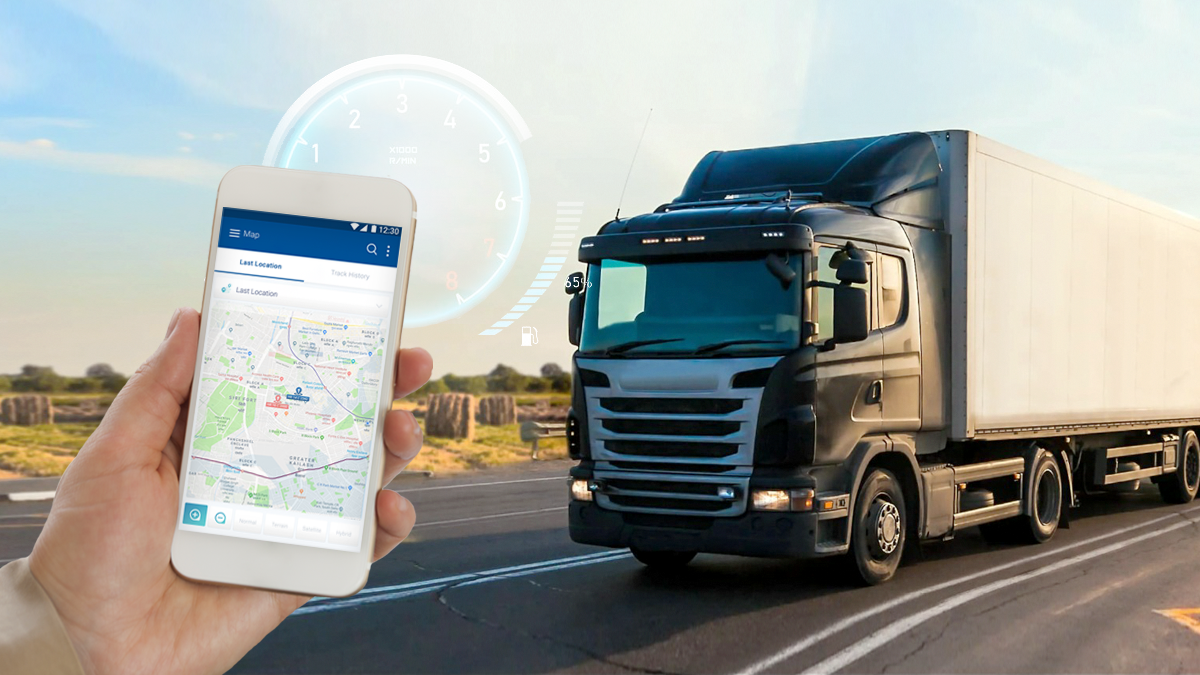
A GPS technology to track vehicle location, activity, routes, travel history, unauthorised used and condition of fleet vehicles in real-time.
2. Real-Time Fleet Monitoring
Real-time fleet monitoring allows fleet managers to continuously be aware of the location, movement and operational activities of active or inactive vehicles. Monitor delays, unscheduled stops, route deviations and other issues on the spot.
3. Driver Behaviour Monitoring
Driver behavior monitoring equipped with AI Vision Analytics can help track driving patterns like speeding, hard braking, rapid acceleration, excessive idling and other risky behavior.
4. Vehicle Maintenance Management
Reduce unexpected breakdowns and keep track of scheduled service, inspections, repairs, and maintenance requirements by monitoring vehicle mileage and maintenance schedules.
5. Predictive Maintenance
Explain how vehicle diagnostics and historical data help identify potential faults before breakdowns occur.
6. Fuel Management
Dashboard visibility on vehicle fuel consumption helps identify unusual fuel usage, decrease fuel costs and prevent unwanted theft.
7. Playback and Trip History
Map view of fleet whereabouts from start of the delivery to end of service allows managers to track down daily routines if any incident occurs.
8. Geofencing
Manually create virtual geographic boundaries around specific locations and save them instantly. Fleet managers can receive notifications when vehicles enter or leave designated areas, making it useful for monitoring customer sites, restricted zones, depots, and delivery locations.
9. Dashcams / Video Telematics
Dashcams and video telematics combine video footage with vehicle and driving data to provide greater visibility into events on the road. Incidents will be recorded and categorise in real-time.
10. Fleet Analytics and Reporting
The V3 Dashboard allows managers to identify trends such as vehicle fuel usage, carbon emissions, mileage, incidents, maintenance and many more. Recorded data can be downloaded as a PDF whenever necessary.
11. Mobile Fleet Management
Fleet Management System can be viewed by using mobile devices such as Tablets or Smartphones. Enhancing user experience when they are away from the office. This feature is available both for the manager and drivers.
12. Alerts and Notifications
Notifications can be configured for situations such as speeding, geofence violations, unauthorized vehicle use, maintenance requirements, excessive idling, or other important events. Each alert will directly be notified through all management devices.
13. Offline Reporting
Offline reporting allows field and mobile workers to record work activities and generate reports even when an internet connection is unavailable. Once connectivity is restored, the stored information can be synchronized with the central system, helping ensure that field data is not lost.
Benefits of Using a Fleet Management System
Reduce Fleet Operating Costs
Managers can analyse and identify unnecessary expenses and activities just by looking at one Dashboard.
Improve Driver Safety
Automatically monitor driver’s behavior with fleet dashcam and telematics. Incidents such as micro-sleep, speeding and others will be immediately alerted and recorded for manager’s view in case of an accident. This will encourage drivers to stay safe at all times.
Reduce Fuel Consumption
Fleet managers can identify excessive idling, inefficient routes, fuel theft, and other factors that contribute to higher fuel costs.
Improve Vehicle Utilization
Visibility is provided for vehicles that are running throughout their lifespan. This allows the management to identify which vehicles are not used or overused on a daily to yearly basis.
Optimise Routes
Fleet managers can plan the routes efficiently based on their playback and history features. This will reduce the number of mileage, fuel consumption and delivery delays that occurs.
Reduce Vehicle Downtime
Vehicle Downtime can be registered inside the Fleet Management System thus creating an active maintenance cycle without any hassle. Alerts and notifications will pop up once the vehicle is due for maintenance.
Improve Fleet Visibility
Fleet management software provides a centralized view of vehicles, drivers, routes, and operational activities. Hence, allows managers to monitor their fleet in real time and respond more quickly to unexpected events or operational issues.
Simplify Reporting
Automated fleet reporting reduces the need for manual data collection and paperwork. Managers can generate reports covering vehicle activity, mileage, fuel consumption, driver behaviour, maintenance, and other fleet metrics, making it easier to analyze performance and share information.
Improve Customer Service
Accurate vehicle locations, optimized routes, and real-time updates can help improve delivery coordination, reduce delays, and provide customers with more accurate service information.
Support Regulatory Compliance
Keep important records of your vehicle for compliance with Fleet Management System. Online cloud based documentation can be stored and found easily. Track down all the information such as vehicle maintenance, driver activity, operating hours, and fleet operations in seconds.
Industries That Benefit from Fleet Management Systems
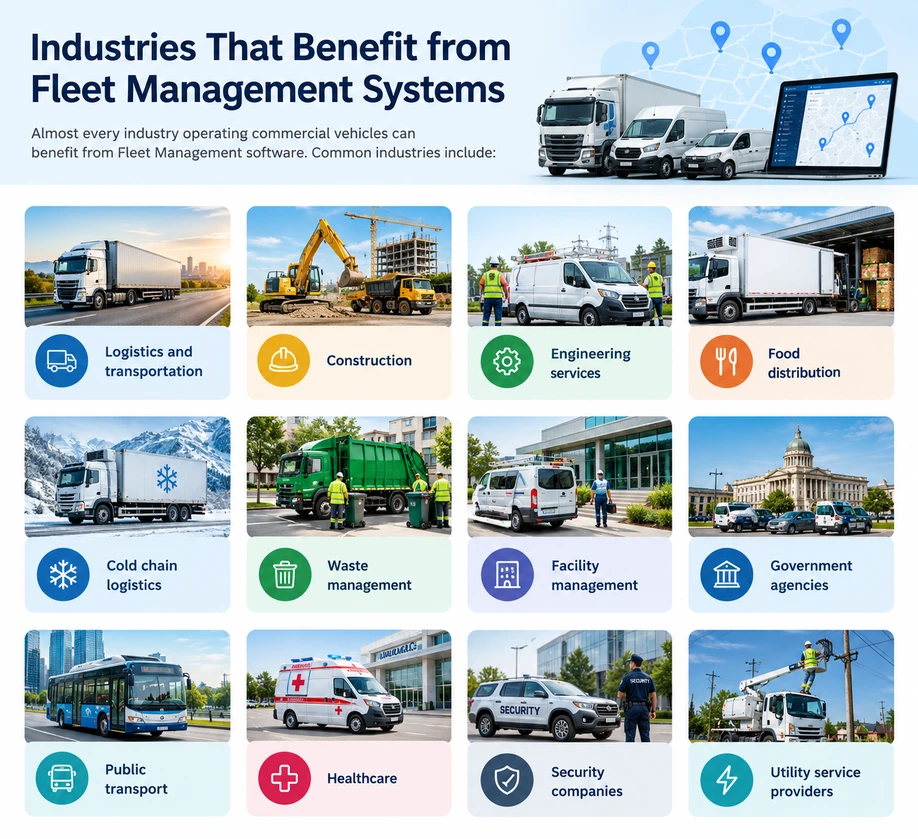
Almost every industry operating commercial vehicles can benefit from Fleet Management software. Common industries include:
• Logistics and Transportation – Manage vehicle locations, routes, deliveries, drivers, and fleet performance efficiently.
• Construction – Monitor construction vehicles, equipment, driver activity, and movement between job sites.
• Engineering Services – Track service vehicles and technicians while improving route planning, scheduling, and field operations.
• Food Distribution – Optimize delivery routes, monitor vehicles, monitor temperatures and improve the efficiency of time-sensitive food deliveries.
• Cold Chain Logistics – Monitor vehicle movements and help maintain reliable transportation conditions for temperature-sensitive goods.
• Waste Management – Optimize collection routes, monitor waste vehicles, and improve fleet productivity and service coverage.
• Facility Management – Coordinate service vehicles and mobile teams while improving scheduling, routing, and operational visibility.
• Government Agencies – Monitor government vehicles, manage fleet utilization, and improve accountability and operational efficiency.
• Public Transport – Track buses and other transport vehicles to improve route management, service reliability, and passenger operations.
• Healthcare – Manage ambulances, medical transport, and healthcare service vehicles to support timely and reliable operations.
• Security Companies – Monitor patrol vehicles and security teams to improve response times, coverage, and operational visibility.
• Utility Service Providers – Track field service vehicles and technicians to improve dispatching, route planning, and response to service requests.
Fleet Management System for Singapore
Fleet management systems have become more and more important for commercial vehicle operators in Singapore. Businesses – from logistics and construction firms to food delivery, facilities management and cold-chain operators – need greater visibility on vehicle location, driver behavior, fuel consumption and fleet productivity.
The notion of a fleet management system is also recognized in the Government’s digitalization framework in Singapore. The V3Nity-FMS Fleet Management System is listed as a pre-approved fleet management solution for businesses in the Singapore Government’s GoBusiness directory.
Fleet management systems are also defined by the Infocomm Media Development Authority (IMDA) as the use of technologies such as telematics and GPS to enable real-time vehicle location tracking, vehicle condition monitoring, route optimization and data-driven fleet management decisions.
What Is Fleet Telematics?
In Short, telematics is the combination of GPS data with information from the vehicle and other sensors.
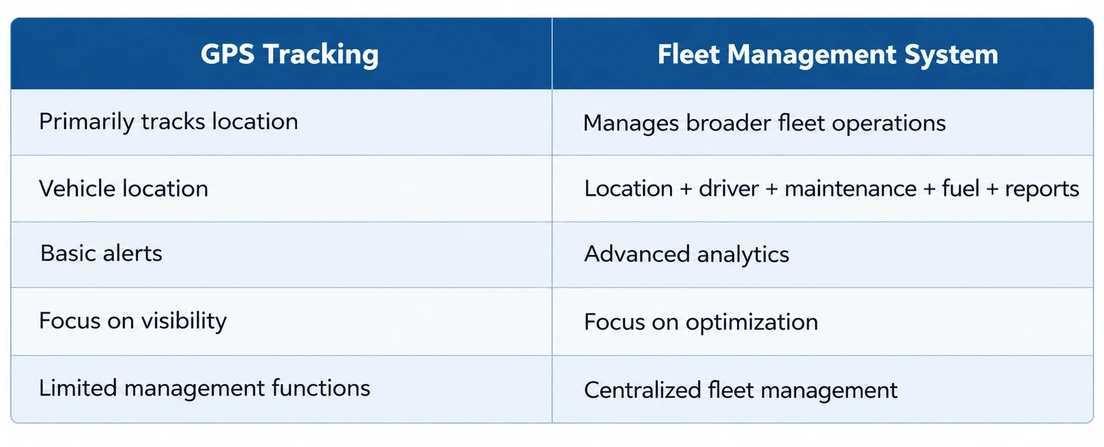
1. GPS Tracking – GPS tracking determines a vehicle’s location, speed, direction, and travel history, allowing fleet managers to monitor where vehicles are and how they move.
2. Telematics – Telematics expands beyond location tracking by collecting vehicle and driver data such as mileage, fuel usage, engine information, driving behaviour, and vehicle activity. This data is transmitted to a central platform for analysis.
3. Fleet Management System – The fleet management system turns GPS and telematics data into actionable information through dashboards, alerts, analytics, and reports. Fleet managers can use these insights to improve vehicle utilization, driver safety, fuel efficiency, maintenance, route planning, and overall fleet performance.
How Does CAN Bus Work in Fleet Management?
Controller Area Network (CAN Bus) is a vehicle communication system that enables communication between various electronic components, such as engine, transmission and braking system.
CAN Bus in fleet management allows compatible telematics devices to collect real-time vehicle data and send it to a centralized fleet management platform. This provides fleet managers with better visibility into vehicle performance, fuel consumption and overall vehicle health.
How CAN Bus Works?
Vehicle Data Collection:
CAN Bus collects the data from the vehicle’s electronic control units (ECUs), including engine RPM, fuel levels, engine temperature, and diagnostic fault codes, depending on vehicle compatibility.
Data Transmission:
A compatible telematics device collects the available CAN Bus data and transmits it via a mobile network to the fleet management platform.
Real-Time Monitoring:
Fleet managers can access vehicle performance data via a centralized dashboard to monitor aspects such as fuel efficiency, engine health, and potential mechanical issues.
Maintenance and Optimisation:
Data collected is used to identify faults, plan maintenance, and manage fuel. Together with proper analytics, it can also enable predictive maintenance.
Advantages of CAN Bus in Fleet Management
- Enhanced vehicle visibility: Track engine performance and vehicle health.
- Better fuel management: Use the fuel consumption data you have to find inefficiencies.
- Reduced vehicle downtime: Early diagnosis of diagnostic faults and Planned maintenance
- Predictive Maintenance: Use vehicle data and analysis to anticipate mechanical problems before they cause breakdowns.
Fleet Management System vs GPS Tracking
How to Choose the Best Fleet Management System in 2026
Based on our case studies with companies that used our V3Nity Fleet Management System, accumulatively it has been proven that there are 25% reduction in fuel cost savings, 100% fleet and staff visibility and a 300% increase in operational efficiency. One point leads to another. Ensure that you know what your requirements are before pursuing a system.
Below are the list of how you can get started;
Fleet Size
Select a fleet management system that can handle your current number of vehicles, but also has the flexibility to accommodate future fleet growth. For instance, a fleet manager with 10 vehicles can monitor most vehicles from one dashboard without complicated workflows. Managing 500 vehicles though may require user permissions, automated alerts, vehicle grouping by branch or region, advanced reporting and integrations with other business systems.
GPS Tracking Capabilities
Look for accurate GPS tracking with real-time location updates, route history, geofencing, and vehicle movement monitoring on a map.
Driver Monitoring
Ensure that there is a device that can monitor driver behaviour such as speeding, harsh braking, acceleration, idling, and other safety-related activities just by scanning their facial reaction and analyse vehicle behaviour.
Vehicle Maintenance
A good fleet management system should help schedule maintenance, track service history, and provide reminders to reduce unexpected vehicle breakdowns.
Fuel Management
Look for fuel monitoring features that help track fuel consumption, identify unusual usage, and reduce unnecessary fuel costs.
Reporting & Analytics
Choose a platform with customizable reports and analytics that turn fleet data into useful insights for improving operational performance.
Mobile App
Find a system that can cater to smartphones, tablets, laptops and PCs. This convenience allows fleet managers and field teams to monitor vehicles, receive alerts, access reports, and manage fleet operations while on the go.
Integration Capabilities
Check whether the system can integrate with existing business software, GPS devices, ERP systems, fuel systems, and other operational platforms.
Scalability
Choose a solution that can easily accommodate additional vehicles, users, locations, and features as your business grows. Example, whenever you have a new vehicle, you can add in anytime without any hassle.
Data Security
Make sure the provider uses appropriate security measures to protect vehicle, driver, customer, and business data from unauthorized access.
Customer Support
Reliable customer support ensures that users can receive timely assistance with system setup, technical issues, training, and ongoing fleet management needs.
Pricing & Total Cost of Ownership
Evaluate not only the subscription price but also hardware, installation, maintenance, upgrades, support, and other costs that contribute to the system’s total cost of ownership.
Industry-Specific Features
Choose a fleet management system with features designed around your industry’s specific operational requirements, workflows, vehicles, and compliance needs.
Fleet Management System Guide Evaluation Checklist
Here are some checklist that can be used to help you get started.
☐ Real-time GPS tracking
☐ Geofencing
☐ Driver behaviour monitoring
☐ Maintenance tracking
☐ Fuel monitoring
☐ Automated alerts
☐ Reporting
☐ Mobile access
☐ API/integrations
☐ Customer support
☐ Scalability
☐ Data security
How Fleet Management Systems Improve ROI
A fleet management system helps businesses improve operational efficiency by providing greater visibility and control over vehicles, drivers, and daily fleet activities. Through GPS tracking, telematics, route optimization, fuel monitoring, and driver behaviour tracking, businesses can identify inefficiencies such as excessive fuel consumption, unauthorized vehicle use, inefficient routes, and low vehicle utilization.
By combining real-time fleet data with maintenance monitoring and performance analytics, businesses can reduce vehicle downtime, control maintenance costs, and improve driver productivity. Automated alerts and reports also make it easier for fleet managers to identify issues quickly and take corrective action before they become costly problems.
When implemented effectively, fleet management systems can help businesses identify and address sources of avoidable operating costs while making better use of their vehicles and resources. The result is a more efficient, productive, and visible fleet that can support long-term business growth. For Example, a company operating 50 vehicles may be able to identify unnecessary idling, inefficient routes, and overdue maintenance through fleet data, potentially reducing avoidable operating costs.
How to Implement a Fleet Management System
1. Assess your fleet
2. Identify operational problems
3. Define requirements
4. Select a solution
5. Install tracking hardware
6. Configure the platform
7. Train drivers and fleet managers
8. Monitor results
9. Review reports
10. Optimize operations
The cost of having a Fleet Management System
The cost of the system varies depending on the size of the fleet, the features required, hardware used, installation requirements, connectivity, integrations, and level of support. A business managing a small number of vehicles may have different requirements from a company managing hundreds of vehicles across multiple locations.
The total cost may include several components:
• GPS tracking hardware – The type and capabilities of the tracking device installed in each vehicle.
• Software subscription – Usually influenced by the number of vehicles, users, features, and services included in the platform.
• Installation – Installation costs can vary depending on the number and type of vehicles and the complexity of the installation.
• Dashcams and video telematics – Additional hardware and video-related features may affect the overall cost.
• Connectivity – GPS tracking devices may require mobile data connectivity to transmit vehicle information to the platform.
• Integrations – Connecting the fleet management system with ERP, fuel management, HR, maintenance or other business systems may involve additional requirements.
• Support and maintenance – Training, technical support, hardware maintenance and replacement services may also contribute to the total cost of ownership.
Because every fleet has different operational requirements, there is no single price that applies to every business. The most suitable approach is to determine the number and type of vehicles, required features, existing systems and operational goals before comparing quotations.
Request a Fleet Management System Quotation
If you are considering fleet management for your business, you can request a quotation based on your specific fleet requirements. Providing information such as your fleet size, vehicle types, required features, operating locations and existing systems can help the provider recommend a suitable configuration and provide a more accurate quotation.
Request a quotation from V3 Smart Technologies to discuss your fleet requirements and find out which fleet management features and configuration are suitable for your business.
Support for PSG Fleet Management System
Eligible Singapore-based businesses may be able to receive support under the Productivity Solutions Grant (PSG) to adopt approved digital solutions, which may include eligible fleet management solutions.
Businesses who are interested in a fleet management solution should review the latest PSG eligibility requirements, funding conditions and solution-specific requirements before applying.
Limitations of Fleet Management Systems
Fleet Management Systems give you visibility and data, but they don’t automatically fix operational problems. GPS accuracy may differ depending on the environment and connectivity. Driver monitoring systems can detect some behaviors, but human review and appropriate driver training are still important. Maintenance alerts can help with planning, but they don’t replace physical vehicle inspections. Likewise, route optimization recommendations may have to be adjusted based on traffic, road restrictions, delivery requirements and other real-world factors.